When symptoms don't
make sense,
the pattern usually does.
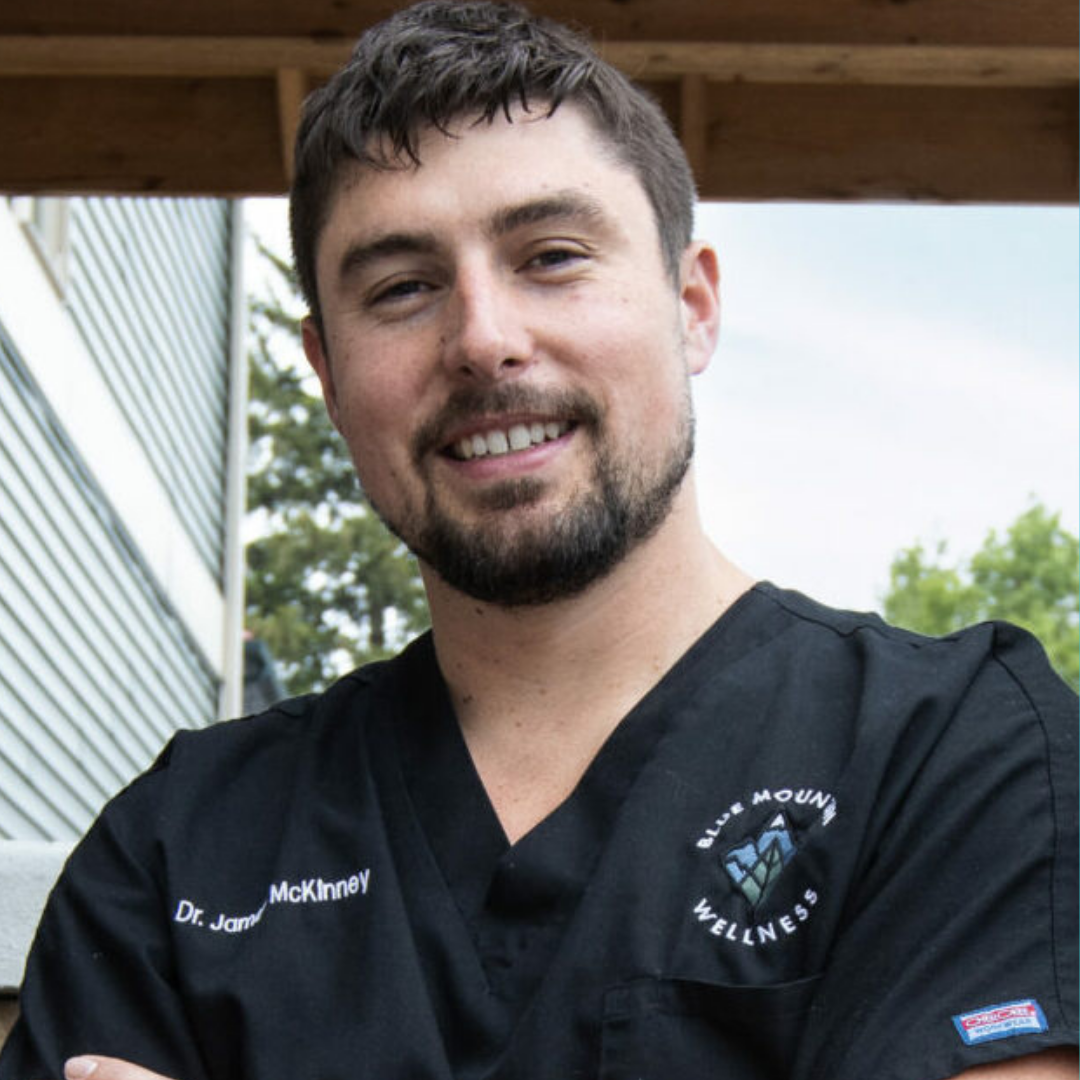
I'm Dr. James McKinney, chiropractor, neuropathy specialist, and founder of Blue Mountain Wellness. Most chronic symptoms, including fatigue, neuropathy, gut reactions, brain fog, and post-infection recovery, share an underlying breakdown in how the body regulates itself. This framework helps identify that pattern, so the protocol fits the person, not the diagnosis label.
Educational content. Not emergency care. Individual evaluation required.The Thesis
Different symptoms. Often the same pattern.
"Identify that pattern and the protocol can finally line up with what the body is actually doing."
Patients with chronic illness rarely fit one box. Fatigue, neuropathy, food reactions, mood changes, joint pain, post-viral or post-tick symptoms, they look like separate problems, so they get treated separately. That is why care stalls.
When you map the timeline carefully and look at objective markers, a different picture emerges: the immune, metabolic, neurologic, and gut systems have stopped regulating each other cleanly.
Not every symptom shares the same cause. This framework helps surface patterns when they exist; it does not replace differential diagnosis or emergency evaluation.
Where Does This Show Up?
Start with what you're living with.
Pick the closest description. You'll see a patient-friendly explanation of the pattern this category usually fits, and a clear next step. None of these are diagnoses, they're starting points for evaluation.
General, or you are not sure where to start
You feel off. Energy, sleep, mood, digestion, or pain have been drifting in the wrong direction, and prior workups did not connect the dots. That is the most common starting point, and the most useful one, because it forces us to look at the whole pattern rather than chase the loudest symptom.
Likely pattern: low-grade systemic inflammation with metabolic and autonomic dysregulation. Often there is a triggering event, a viral illness, a stressful season, an injury, a course of antibiotics, that the body never fully reset from.
Next step: a structured timeline interview, a baseline lab panel, and a targeted symptom map to identify which of the five regulatory systems are most strained.
Lyme & tick-borne exposure
Maybe you had a tick bite years ago and never fully recovered. Maybe testing was equivocal. Maybe you finished antibiotics but the joint pain, fatigue, neurologic symptoms, or cognitive changes lingered. Tick-borne illness is real, and so is post-treatment Lyme syndrome, but they sit inside a broader story about how immune signaling gets stuck.
Likely pattern: a chronic inflammatory and immune-regulation pattern that may persist after the original organism is addressed, often layered with metabolic and gut-barrier stress.
Next step: standardized two-tier serology when clinically appropriate, alongside markers of inflammation and immune signaling. Specialty antibody panels are not required and not promised. They may be considered case-by-case, and only when they would meaningfully change the plan.
Chronic fatigue, post-viral, "I am not the same"
Fatigue that does not match your activity level. Crashes after exertion. A lingering feeling of not having recovered after COVID, mono, or another infection. Sleep that does not restore.
Likely pattern: impaired cellular energy production combined with autonomic and immune dysregulation. The body is conserving rather than producing.
Next step: rule out the standard contributors first, including thyroid, anemia, sleep apnea, depression, and B12/iron, then evaluate metabolic and inflammatory markers and pace activity around objective measures, not willpower.
Neuropathy & nerve symptoms
Burning, numbness, tingling, electric pain, balance changes, most often in the feet, sometimes in the hands. Many patients arrive after being told there is "nothing else to do" beyond medication.
Likely pattern: small-fiber stress driven by some combination of metabolic load (blood sugar variability), inflammation, micronutrient gaps, and autonomic strain. Less commonly, an autoimmune or post-infectious driver.
Next step: nerve-relevant labs, a metabolic panel including A1c and fasting insulin, B-vitamin and methylation markers, and a structured at-home protocol with objective tracking. Severe or rapidly progressing neuropathy needs urgent neurology evaluation, not this framework.
Thyroid & autoimmune
You have been told your thyroid is "normal" but you do not feel normal. Or you are on replacement and still struggling. Or other autoimmune conditions run in your family.
Likely pattern: immune signaling that has tilted toward chronic inflammation and self-targeting, often layered with gut-barrier stress and metabolic load. Thyroid is frequently the most visible casualty of a broader regulatory drift.
Next step: a complete thyroid panel (not just TSH), thyroid antibodies, and inflammatory markers, interpreted together with your timeline, not as isolated numbers.
Mold & environmental toxin load
Symptoms that worsen in a specific building, basement, or season. Multi-system complaints, including sinus, cognitive, fatigue, and skin issues, that do not fit one diagnosis. A water-damaged home or workplace.
Likely pattern: immune activation from environmental triggers compounded by impaired clearance pathways. The exposure matters; so does the body's capacity to handle it.
Next step: environmental assessment first (the exposure has to be addressed), then clinically appropriate testing for inflammation, mast cell activity, and clearance support. Promises about specific specialty panels are not made up front. Testing is selected to change the plan, not to collect data.
Metabolic & blood sugar
Energy crashes, sugar cravings, mid-afternoon brain fog, weight that will not move, A1c creeping up, family history of type 2 diabetes. Metabolic stress quietly drives inflammation, neuropathy, and immune dysregulation long before a diabetes diagnosis is made.
Likely pattern: insulin resistance and glucose variability stressing the nervous and immune systems. This is often the root that other symptoms grow out of.
Next step: fasting insulin, A1c, lipid panel, and when useful, continuous glucose data, paired with a meal and movement structure built around your numbers.
Gut & food reactions
Bloating, irregular stools, reflux, an expanding list of foods that do not agree. Histamine reactions. Symptoms that flare during stress.
Likely pattern: compromised intestinal barrier function and altered microbial signaling driving immune reactivity that shows up far beyond the gut, including joints, skin, mood, and cognition.
Next step: a structured elimination and reintroduction, basic gut markers, and when clinically relevant, targeted environmental and infectious triggers. Not every gut symptom needs an expensive stool panel.
Immune Regulation, Honestly
It's not two modes. It's a conversation.
You'll see "Th1 vs. Th2" framings online that make immunity sound like a light switch. The reality is more interesting and more useful: the immune system runs several overlapping signaling programs that should adapt to context. When that adaptability gets stuck, chronic symptoms follow.
Th1 signaling
Coordinates the response to intracellular threats, including viruses and certain bacteria. When this arm is under-engaged, infections can persist below the radar.
Th2 signaling
Handles parasites and barrier threats and shapes allergic responses. Chronically elevated, it shows up as expanding allergies, food sensitivities, and histamine reactivity.
Th17 signaling
Useful for fighting fungi and certain bacteria at mucosal surfaces. Sustained, it drives inflammation that overlaps with autoimmune presentations.
Regulatory T cells & NK cells
Regulatory T cells calm the system down when a threat is handled. NK cells handle infected and stressed cells directly. Both are easy to under-appreciate; both are essential to actually finishing a response.
What this means clinically. No clinic test cleanly labels a person "Th1" or "Th2." What we look for instead is the pattern of behavior, including symptom profile, response to triggers, inflammatory markers, and infection history. We then build a protocol that supports the parts of the system that are stuck or overworked. That is a very different posture than promising a specific lab will name your disease.
The Root-Cause Framework
Five regulatory systems.
One conversation between them.
Chronic symptoms tend to come from breakdown in some combination of these five systems. They interact, strain in one pulls on the others, so the goal isn't to pick a favorite. It's to identify which are most strained for you, in what order to support them, and how to measure progress.
-
I.
Immune regulation How the immune system reads, responds to, and resolves threats, and how cleanly it stops. Chronic activation keeps the rest of the body on alert.
-
II.
Nerve & cellular energy Mitochondrial output, autonomic balance, and small-fiber nerve health. When energy production stalls, everything downstream feels it, from cognition to digestion to recovery.
-
III.
Blood sugar & metabolic stress Insulin signaling and glucose variability. Quietly the most common driver of inflammation, neuropathy, and fatigue, long before any diabetic label.
-
IV.
Gut barrier & inflammation Intestinal lining integrity and microbial signaling. A reactive gut keeps feeding the immune system reasons to stay on.
-
V.
Toxic & infectious burden Environmental exposures, lingering or reactivated infections, and the body's clearance capacity. The exposure matters; so does the system trying to handle it.
How Evaluation Works
Four steps. No guessing.
A structured process not a panel of tests sold up front. The goal at each step is to learn enough to make the next decision, and nothing more.
Testing, Positioning
Categories, not promises.
Testing is a tool, not the protocol. Here are the categories that may be considered, in roughly the order they are typically used. None are guaranteed, none are required for care to begin, and no single specialty panel is ever positioned as the answer.
About Dr. McKinney
A clinician who looks for the whole pattern.
"Self-care is the new healthcare. But self-care without a framework is just guessing. My job is to give you the framework."
Clinical Rationale
Where the framework sits relative to established guidance.
This work is not a replacement for conventional medicine. It's structured around it. A few of the references that inform how testing and patterns are interpreted:
Common Questions
Honest answers, up front.
-
No. Many patients arrive without a clear diagnosis, and that is often why they come. The framework is built to help surface patterns when conventional labels have not. If you do have diagnoses, we incorporate them; we do not override them.
-
Not as a price of admission. We almost always pull baseline conventional labs because they are cheap and informative. Beyond that, testing is added only when it would change what we do next.
-
No. Tick-borne illness is one of the patterns this framework handles well, but the same approach applies to neuropathy, fatigue, thyroid and autoimmune presentations, gut and food reactivity, mold and toxin load, and metabolic dysregulation.
-
No. Severe symptoms, including chest pain, sudden neurologic changes, suicidal thoughts, rapidly progressing weakness, and signs of sepsis, require emergency care. This work is structured, longitudinal, and educational; it is not a substitute for urgent or emergency medicine.
-
Supplements are tools, not the strategy. Without a framework and without objective markers to track, they are guessing in capsule form. Here, anything recommended is sequenced, justified, and re-evaluated against measurable change.
-
Yes, and you should. This work is designed to coordinate with your PCP and specialists, not replace them. We share results, respect their scope, and keep them in the loop where it matters.