Your thyroid is being
attacked. The question
is why.
Fatigue that no amount of sleep resolves. Hair falling out in the shower. Cold hands, brain fog, unexplained weight gain. If you've been told your TSH is "normal" while you feel anything but, or if you're on thyroid medication and still symptomatic, your thyroid isn't the root problem. It's the target of one.
The Basics
What Is Thyroid Dysfunction?
The thyroid is a small butterfly-shaped gland at the base of your neck, but it governs the metabolic rate of every cell in your body. When it underperforms, everything slows down. When it overperforms, everything accelerates. And when the immune system turns against it, you can experience both at different times, while standard lab tests show nothing unusual for years.
The thyroid produces too little hormone. Every system slows: metabolism, digestion, cognition, heart rate, temperature regulation. The most common form, often underdiagnosed because TSH can remain "normal" while cellular function is already impaired.
The thyroid overproduces hormone. The result is the opposite: racing heart, anxiety, heat intolerance, weight loss despite normal eating, and sleep disruption. Often triggered by Graves' disease, another autoimmune condition, or by nodules producing hormone independently.
The most common thyroid condition in the US, and the most commonly missed. The immune system produces antibodies that slowly destroy thyroid tissue. A patient can swing between hypo and hyper symptoms during the attack, while TSH remains technically normal throughout.
Lab values fall within "normal" range, but symptoms are real and progressive. Subclinical hypothyroidism is often the earliest detectable stage of Hashimoto's, years before overt disease. Treating the number without the patient is how this stage gets missed entirely.
The 5 Shared Mechanisms
Why Thyroid Disease Is a Whole-Body Failure, Not a Gland Problem?
The thyroid gland is not the originating problem in most thyroid disease. It is the gland caught in the crossfire of systemic dysfunction. Here is how each of the five shared root mechanisms directly drives thyroid failure, hormone conversion impairment, and autoimmune attack.
Chronic cortisol elevation from sympathetic overdrive is one of the most potent suppressors of thyroid function. Cortisol directly inhibits the conversion of T4 (the inactive storage hormone) to T3 (the active hormone that drives cellular metabolism). It also increases Reverse T3, an inactive blocking hormone, and suppresses TSH at the pituitary level. A patient can have a "normal" TSH while being profoundly hypothyroid at the cellular level because the nervous system dysregulation is occurring downstream of where TSH is measured.
The thyroid is one of the most metabolically active glands in the body. Thyroid hormone synthesis requires substantial ATP production. When thyroid cell mitochondria are damaged by oxidative stress or nutrient depletion, hormone synthesis slows even if the gland itself is not being attacked. Thyroid hormone receptors throughout the body also require adequate mitochondrial function to respond properly, meaning cellular hypothyroidism can occur even with adequate circulating hormone levels.
Intestinal permeability is now understood to be the primary trigger for Hashimoto's autoimmunity through a process called molecular mimicry. When gut barrier integrity is lost, partially digested food proteins, particularly gliadin from gluten, enter the bloodstream and resemble thyroid tissue proteins. The immune system mounts an antibody response and then attacks the thyroid by mistake. Additionally, approximately 20% of T4 to T3 conversion occurs in the gut via intestinal bacteria. Dysbiosis directly impairs this conversion, worsening hypothyroid symptoms even in patients on adequate replacement therapy.
Blood sugar swings directly suppress thyroid receptor sensitivity. Insulin resistance impairs cellular uptake of T3 and reduces the expression of thyroid hormone receptors on target tissues. The result: thyroid hormones are present in the blood, but cells cannot properly receive the signal, a kind of metabolic noise that renders even adequate thyroid hormone ineffective at the tissue level. This explains the frustration of patients who are on thyroid medication but still experience all the symptoms of hypothyroidism.
The thyroid is exquisitely sensitive to specific environmental toxins. Fluoride and chlorine from drinking water compete with iodine, an essential thyroid building block, at thyroid transport proteins. Glyphosate, the herbicide found in most non-organic food, disrupts iodothyronine deiodinase, the enzyme that converts T4 to T3. Polybrominated flame retardants found in furniture and electronics structurally mimic thyroid hormones and block receptor binding. These are not theoretical risks. They are measurable mechanisms documented in toxicology research that most endocrinologists never discuss with thyroid patients.
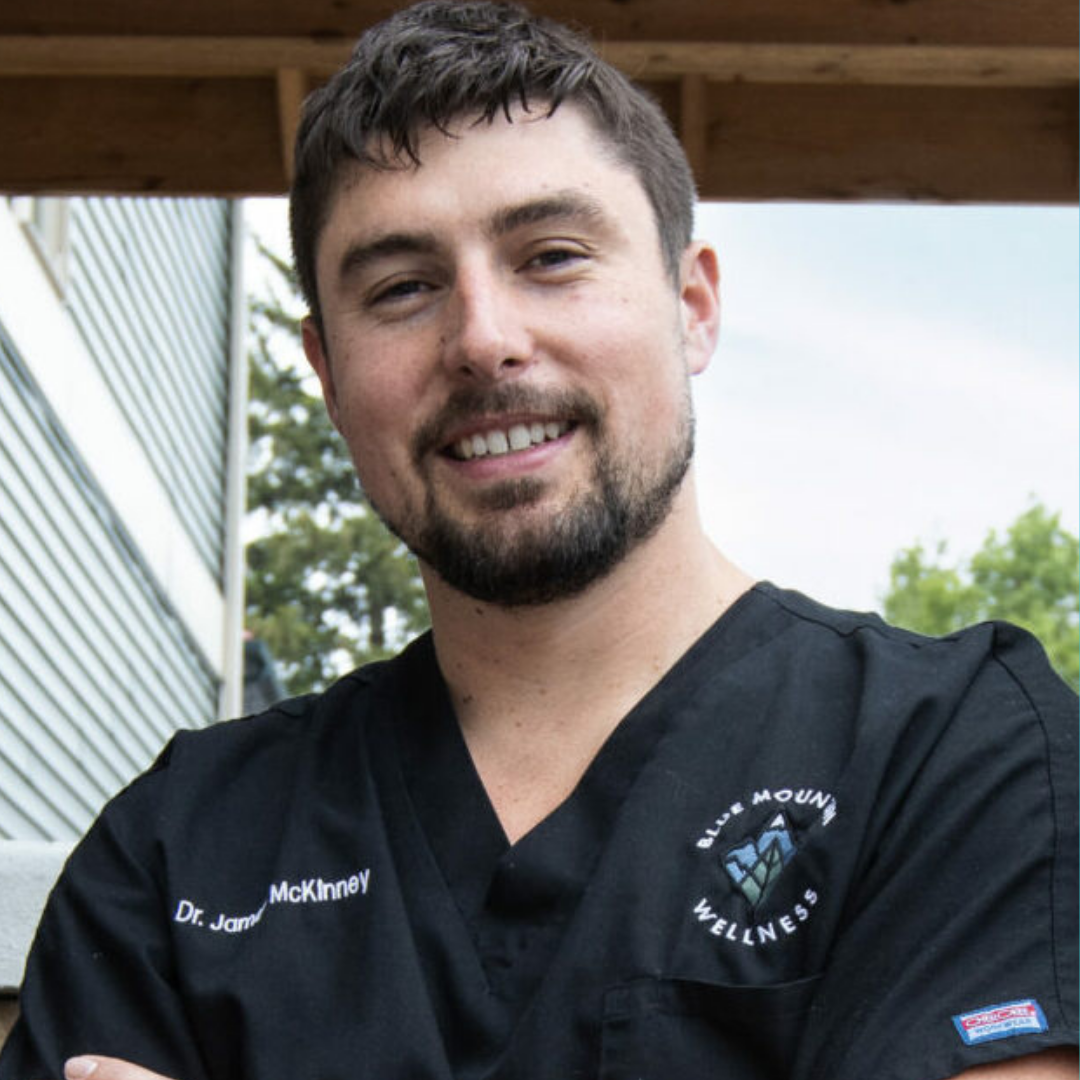
“Most thyroid patients are told to take a pill and come back in 6 months. But if the autoimmune attack is still running, if the gut is still triggering molecular mimicry, if cortisol is still blocking T3 conversion, that pill is doing a fraction of what it could. We have to stop the attack, not just supplement around it.”Dr. James McKinney, D.C., Functional Medicine
Symptom Patterns
Symptoms Through the Lens of Dysfunction
These aren't random complaints. Each symptom maps directly to a specific physiological breakdown. Understanding the mechanism changes how you address it.
Cellular hypothyroidism means mitochondria in every cell operate at reduced efficiency, regardless of how much sleep you get.
Hair follicles require T3 for growth cycle regulation. Selenium, iron, and zinc deficiency compounds this through separate pathways.
Reduced T3 activity lowers basal metabolic rate and reduces thermogenesis. Cold extremities are a direct metabolic effect.
T3 directly regulates neurotransmitter synthesis and brain glucose utilization. Cellular hypothyroidism is neurological, not just physical.
Reduced T3 lowers metabolic rate by 15 to 30%, making conventional calorie math completely unreliable for hypothyroid patients.
TSH can appear normal for years while antibody destruction of thyroid tissue is actively occurring underneath the surface.
T3 governs gut motility. Reduced T3 at the cellular level slows the entire digestive process, compounding gut permeability.
Hypothyroidism reduces hyaluronic acid metabolism, leading to fluid accumulation in tissue and slowed cellular turnover in skin.
HPA axis dysregulation and sympathetic overdrive coexist with hypothyroidism far more commonly than standard medicine acknowledges.
Thyroid hormone is required for normal muscle protein synthesis and mitochondrial energy production in skeletal muscle cells.
Thyroid hormones directly regulate sex hormone binding globulin and the hypothalamic-pituitary-gonadal axis signaling cascade.
T3 deficiency at the cellular level impairs dopamine and serotonin synthesis, producing mood symptoms independent of circulating levels.
The Physiology
What's Actually Happening to Your Thyroid?
The thyroid's job is to set the metabolic rate for every cell in your body. It does this by producing T4, a relatively inactive hormone, which the liver, kidneys, and gut then convert to T3, the active form that enters cells and governs everything from energy production to heart rate, digestion speed, and cognitive function.
“Your thyroid is like a thermostat, but someone keeps jamming the signal between the thermostat and the furnace. The thermostat might be reading correctly, and the furnace might be functional. But if the signal is being blocked by cortisol, toxins, and insulin resistance, the house stays cold regardless.”
In Hashimoto's, the immune system produces antibodies (TPO and thyroglobulin antibodies) that gradually destroy thyroid tissue. The gland fights back by producing more hormone, which keeps TSH "normal" for years, during which time the antibody attack is destroying tissue and the patient feels increasingly symptomatic. By the time TSH becomes abnormal on a standard test, significant tissue destruction has already occurred.
Even without Hashimoto's, the conversion problem is real: 60% of thyroid patients on levothyroxine continue to have symptoms because the five mechanisms impairing T4 to T3 conversion go unaddressed. Addressing only the TSH number without addressing the conversion failure is like checking the oil level in a car with a broken engine.
Triggers & Drivers
Genetics Load the Gun. Your Environment Pulls the Trigger.
Genetic susceptibility is not destiny. It is a vulnerability that requires specific environmental triggers to activate. Here are the four triggers most commonly driving thyroid disease progression.
Gliadin in gluten triggers zonulin release, directly opening tight junctions in the gut epithelium. The resulting permeability exposes the immune system to thyroid-mimicking food proteins, the molecular mimicry mechanism that initiates or maintains Hashimoto's autoimmunity.
Fluoride and chlorine are halogens that compete directly with iodine for thyroid transport proteins. Chronic fluoridated water consumption can impair iodine uptake at the thyroid even in populations with technically adequate dietary iodine.
Sustained high cortisol from chronic stress, unresolved trauma, or HPA axis dysregulation is the most common driver of T4 to T3 conversion suppression. Cortisol-driven increases in Reverse T3 can produce textbook hypothyroid symptoms in patients with completely normal thyroid anatomy.
EBV reactivation, Yersinia enterocolitica infection, and Lyme disease are all documented triggers for Hashimoto's onset via molecular mimicry. The prevalence of post-infectious thyroid autoimmunity is significantly higher than standard medicine acknowledges.
Why Conventional Medicine Fails
Treated With a Pill. Sent Home for 6 Months.
Most thyroid patients receive a TSH test, a T4 prescription, and an appointment 6 months out. Three critical failures explain why that isn't enough.
TSH reflects pituitary signaling, not cellular thyroid activity. A patient can have profound cellular hypothyroidism with a completely normal TSH if conversion failure is occurring downstream of the pituitary.
Levothyroxine provides T4 only. If the five mechanisms impairing T4 to T3 conversion are active, that T4 never becomes the T3 your cells actually need. The root conversion problem is never addressed.
High TPO or thyroglobulin antibodies mean the autoimmune attack is running, regardless of what TSH shows. Normalizing TSH without reducing antibodies means years of continued tissue destruction.
The McKinney's Approach
Stop the Attack. Restore the Signal. Rebuild the Function.
The conventional model asks one question: is your TSH abnormal? The functional model asks five. Is the autoimmune attack still active? Is the gut still triggering it? Is cortisol blocking T3 conversion? Are nutrient deficiencies impairing the enzymes? Are toxins interfering with receptor binding? Those five questions produce a completely different treatment path.
Most thyroid patients are told to take a pill and come back in 6 months. But if the autoimmune attack is still running, if the gut is still triggering molecular mimicry, if cortisol is still blocking T3 conversion, that pill is doing a fraction of what it could. We have to stop the attack, not just supplement around it.Dr. James McKinney, D.C. · Functional Medicine
The Philosophy
5 Pillars of Thyroid Recovery
Addressing thyroid dysfunction without addressing its drivers produces incomplete and temporary results. These five pillars target the root mechanisms, not the number on a lab report.
Removing molecular mimicry triggers (gluten first), repairing tight junctions, and restoring the gut bacteria responsible for 20% of T4 to T3 conversion. No sustainable thyroid recovery happens without this step.
Identifying and addressing the cortisol patterns suppressing T4 to T3 conversion. This includes sleep, adaptogenic support, and nervous system regulation, the fastest lever for improving cellular thyroid function.
Selenium, zinc, magnesium, vitamin D, and iron are all rate-limiting for thyroid hormone synthesis, conversion, and antibody reduction. Deficiency in any one of these impairs the entire system simultaneously.
Reducing fluoride, chlorine, and environmental endocrine disruptors that compete with iodine and block receptor binding. Water filtration and targeted detoxification support are foundational here.
For Hashimoto's, stopping the antibody attack requires identifying what is sustaining it: gut permeability, infectious triggers (EBV, Lyme, Yersinia), or ongoing toxic exposure. Antibody reduction is the measurable outcome of this work.
Cross-Condition Connections
Why Your Thyroid Condition May Share Roots With Other Conditions?
Thyroid patients commonly also have metabolic syndrome, peripheral neuropathy, and Lyme-triggered autoimmunity. These aren't separate problems. They're different expressions of the same five upstream breakdowns.
Slide left or right to see full details
| Root Mechanism | Thyroid | Metabolic | Neuropathy | Chronic Lyme |
|---|---|---|---|---|
| Nervous System Dysregulation | ✓ | ✓ | ✓ | ✓ |
| Mitochondrial Dysfunction | ✓ | ✓ | ✓ | ✓ |
| Gut Dysfunction & Inflammation | ✓ | ✓ | ✓ | ✓ |
| Blood Sugar Instability | ✓ | ✓ | ✓ | ✓ |
| Chronic Stress & Toxic Load | ✓ | ✓ | ✓ | ✓ |
Thyroid neuropathy, peripheral nerve damage caused by chronic hypothyroidism, is one of the most underrecognized connections. Untreated or inadequately treated thyroid dysfunction is a direct cause of peripheral neuropathy, creating Schwann cell dysfunction through the same mitochondrial pathways. Many neuropathy patients have undiagnosed or undertreated thyroid disease as a primary contributor that has been completely missed.
Frequently Asked
Common Questions
Ready to Go Deeper?
A Protocol Built Around Your Pattern, Not Your Diagnosis
A structured protocol built around your specific thyroid pattern. Full panel testing, antibody assessment, gut and cortisol evaluation, and sequenced interventions that address the actual drivers. In person in Pennsylvania or online nationwide.
Work With Me →See how the five shared mechanisms connect thyroid dysfunction to neuropathy, metabolic illness, and chronic Lyme, and why treating any one of them in isolation consistently falls short.
Understand the Model →